Supporting agriculture IoT early warning for paddy field monitoring and operational visibility
Septarian supported an agriculture-focused early warning initiative tied to paddy field monitoring, structured field inputs, outbreak-related indicators, and practical visibility for earlier response coordination.
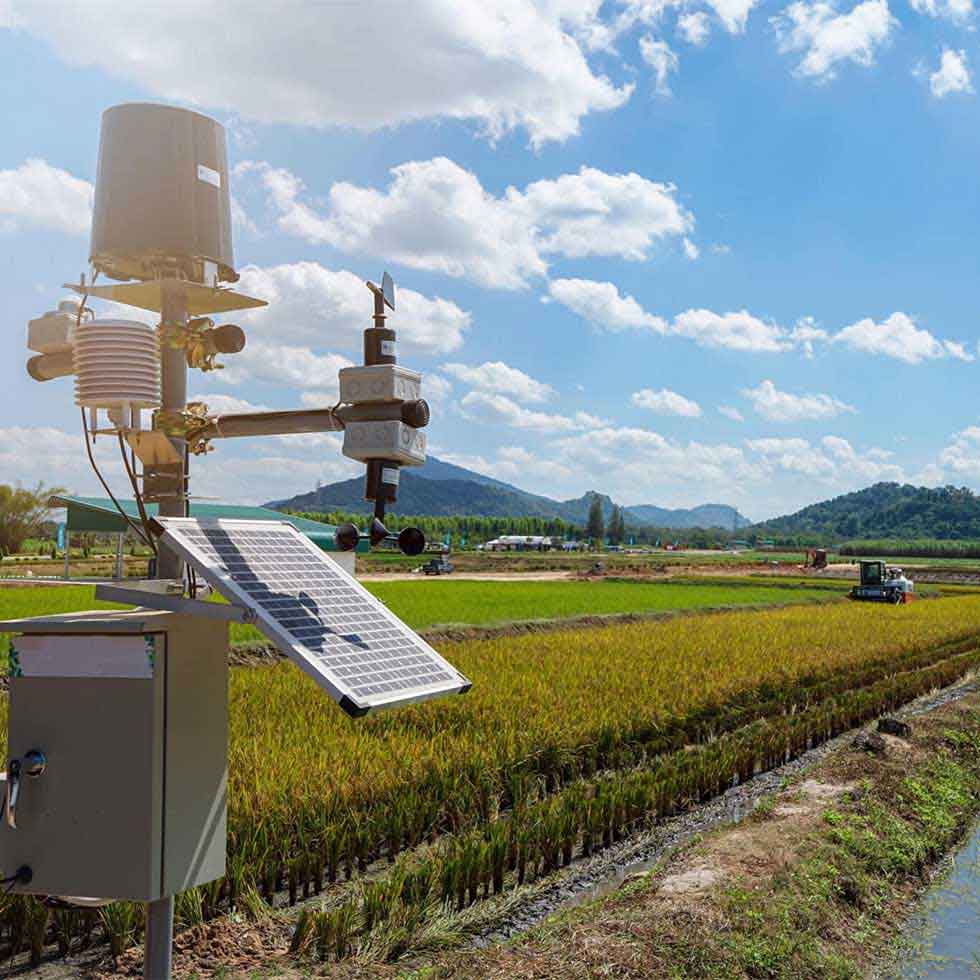
Agriculture / field monitoring
Early warning and field-monitoring workflow
Field evidence consolidation and risk alerting
Turning factual field inputs into risk visibility and response cues
Agriculture Context
Field monitoring becomes valuable when factual field inputs support timely operational judgment.
Agriculture environments are not easy to observe consistently. Conditions shift across distributed field areas, and the value of monitoring depends on whether factual inputs can be organized in time for users to interpret risk, review visible field conditions, and respond more effectively.
Agriculture technology projects demand a different kind of delivery discipline from standard office systems. The environment is more exposed, the user context is more operational, and the usefulness of the system depends on whether field observations and reported inputs can support action rather than simply being collected.
That is why agriculture IoT work should not be framed only as device deployment. The real value lies in how field observations, monitoring records, assessment logic, dashboards, and alerting workflows come together to improve visibility and response readiness.
Why the Initiative Mattered
The challenge was not only gathering inputs; it was turning field evidence into usable monitoring and response cues.
An agriculture-focused early warning initiative becomes meaningful when field observations, outbreak-related indicators, monitoring records, and review workflows help users respond more practically to changing conditions rather than leaving evidence fragmented or underused.
The value of the initiative was not in devices alone. It was in translating factual field inputs into risk visibility, alerts, and more practical response coordination.
Agriculture monitoring has to work in environments where observation is uneven and timing matters.
That makes structured records, visible assessments, and alerting workflows more important than raw data collection on its own.
Useful monitoring had to connect field observations, assessment criteria, and responsible follow-up.
Without that connection, early warning signals risk becoming visible in the system but weak in operational use.
Operational Challenge
Field-oriented early warning requires workflows that respect environmental context and response needs.
The complexity lies in making field-monitoring records useful under real operating conditions, where input quality, review consistency, alert interpretation, and responsible follow-up all have to fit together.
Distributed visibility challenge
Field conditions are not always easy to track consistently, especially when users need practical awareness across physical environments rather than centralized workflows.
Alert usefulness risk
Alerts lose value if available field evidence is not translated into readable monitoring views and clear response relevance for the people using them.
Operational-fit challenge
Monitoring records, dashboards, and workflow decisions must align with real agriculture use rather than treating the solution as a generic technical deployment.
Septarian's Role
Supporting agriculture-focused monitoring through structured records, workflow design, and practical delivery awareness.
Septarian's contribution reflected the need to connect structured field inputs, monitoring logic, assessment workflows, and user-facing visibility into a more usable monitoring environment.
Field monitoring support
- Supporting an agriculture-focused monitoring initiative tied to paddy field visibility and early warning needs.
- Helping shape a delivery approach that reflected real operating conditions rather than a purely technical lab context.
Evidence-to-visibility translation
- Connecting structured field inputs with workflows and views that better supported monitoring interpretation.
- Helping move field information toward more practical visibility, assessment, and response awareness.
Sector-specific delivery awareness
- Supporting digital solution work in an agriculture-oriented environment with its own monitoring realities and user context.
- Reflecting capability beyond office systems into distributed, real-world operational settings.
Solution Approach
From field evidence to risk alert and response coordination.
The early warning workflow should be described as a practical monitoring process, not a generic sensor-only model. Field observations and outbreak-related indicators are collected, consolidated into structured monitoring records, assessed into risk levels, and surfaced through alerts so that responsible users can coordinate field verification, advisory action, or operational response.
Observe
Collect field observations and outbreak-related indicators, including visible conditions, reported symptoms, and factual inputs from the operating environment.
Consolidate
Organize submitted inputs into structured monitoring records for consistent review across locations, dates, and observation categories.
Assess
Evaluate available indicators against defined criteria to determine risk level, response relevance, and need for closer attention.
Alert
Generate alerts when monitored conditions require attention, escalation, field verification, or responsible follow-up.
Respond
Support field verification, advisory action, and operational response based on the assessed risk and available field evidence.
Delivered Capability and Value
A stronger basis for field monitoring where risk visibility and response timing matter.
The value of this work should be understood in terms of practical monitoring, structured records, risk assessment support, and response coordination rather than unsupported outcome claims. The initiative reflects a more usable path from field inputs toward operational awareness.
Better field visibility
Stronger support for making field observations and visible conditions more usable to the people monitoring changing agriculture environments.
More usable risk alerting
A clearer relationship between monitoring records, alert interpretation, and practical response awareness in the operating context.
Broader delivery credibility
Evidence that Septarian can support digital solutions extending beyond office systems into sector-specific field and monitoring environments.
What This Demonstrates
What this demonstrates about Septarian
This page is intended to help serious evaluators understand the kind of agriculture and field-monitoring capability Septarian can bring to sector-specific digital initiatives where structured evidence, risk review, and response awareness matter.
Agriculture IoT support capability
Experience supporting agriculture-focused digital initiatives where field inputs, visibility, and practical use need to connect.
Early warning workflow thinking
Understanding that alerting only becomes valuable when it improves operational awareness and supports better response timing.
Field monitoring awareness
Capability relevant to environments where physical conditions, distributed observation, and user context shape system design.
Evidence-to-dashboard translation
Ability to connect structured field inputs with workflows, views, and information presentation that users can act on.
Sector-specific digital delivery
Evidence of supporting solution work outside standard office applications and within domain-sensitive operating settings.
Proof-aware positioning
Delivery framing that remains useful for evaluators without overstating research ownership, institutional roles, or unverified outcomes.
Proof-sensitive note
This case is presented as a capability reference. Named organization references, research-linked affiliations, detailed technical scope, and public outcome wording should only be published where approved.
Exploring agriculture, monitoring, or early warning use cases?
Septarian can support discussions where field monitoring, structured evidence, and early warning visibility need to become more practical for real-world use.
Discuss a Monitoring Solution